By A-Team Family Pressure Washing · Published
Quick answer
Soft washing uses low pressure and a cleaning solution to kill algae, mildew and mold on delicate surfaces such as roofs, stucco and siding. Pressure washing uses high-pressure water to remove dirt and grime from hard surfaces such as concrete driveways, sidewalks and pavers. Most homes need both: soft washing for the house and roof, pressure washing for the flatwork.
What is soft washing?
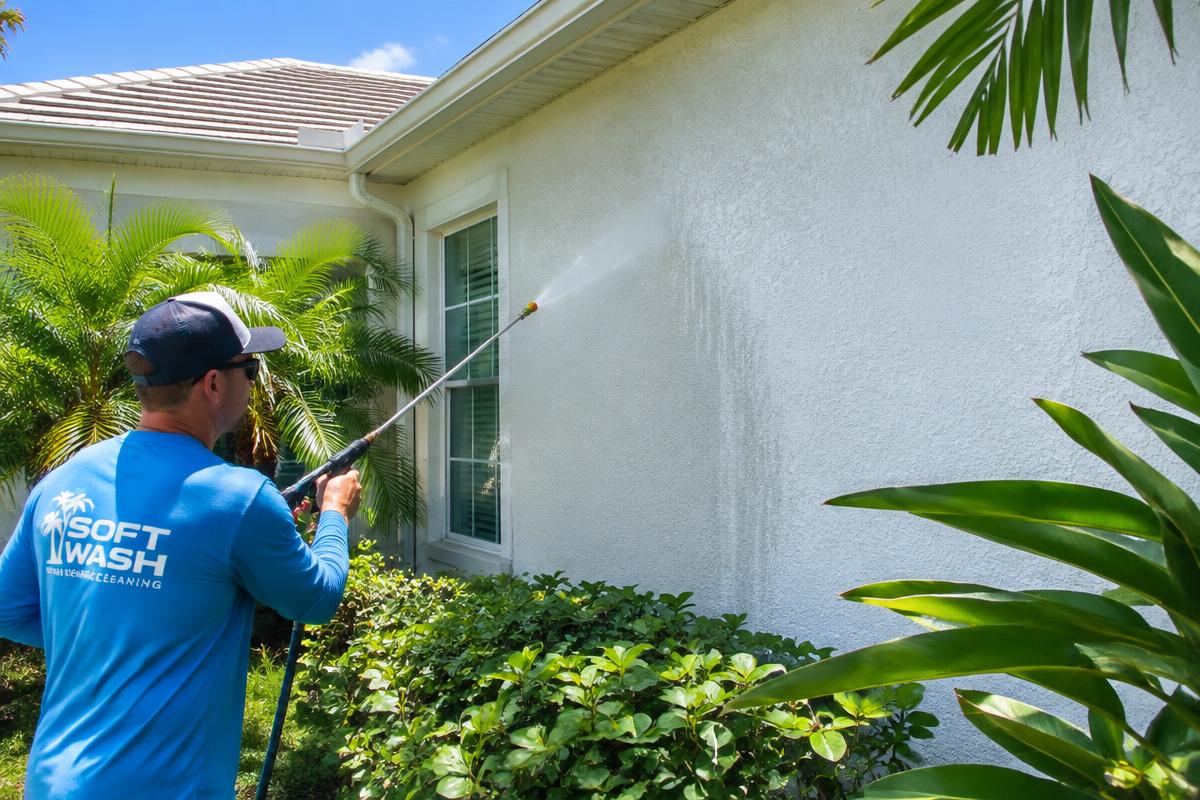
Soft washing is a low-pressure cleaning method. Instead of relying on force, it uses a cleaning solution applied at roughly the pressure of a garden hose. The solution treats the organic growth — algae, mildew, mold and lichen — and is then rinsed away at low pressure.
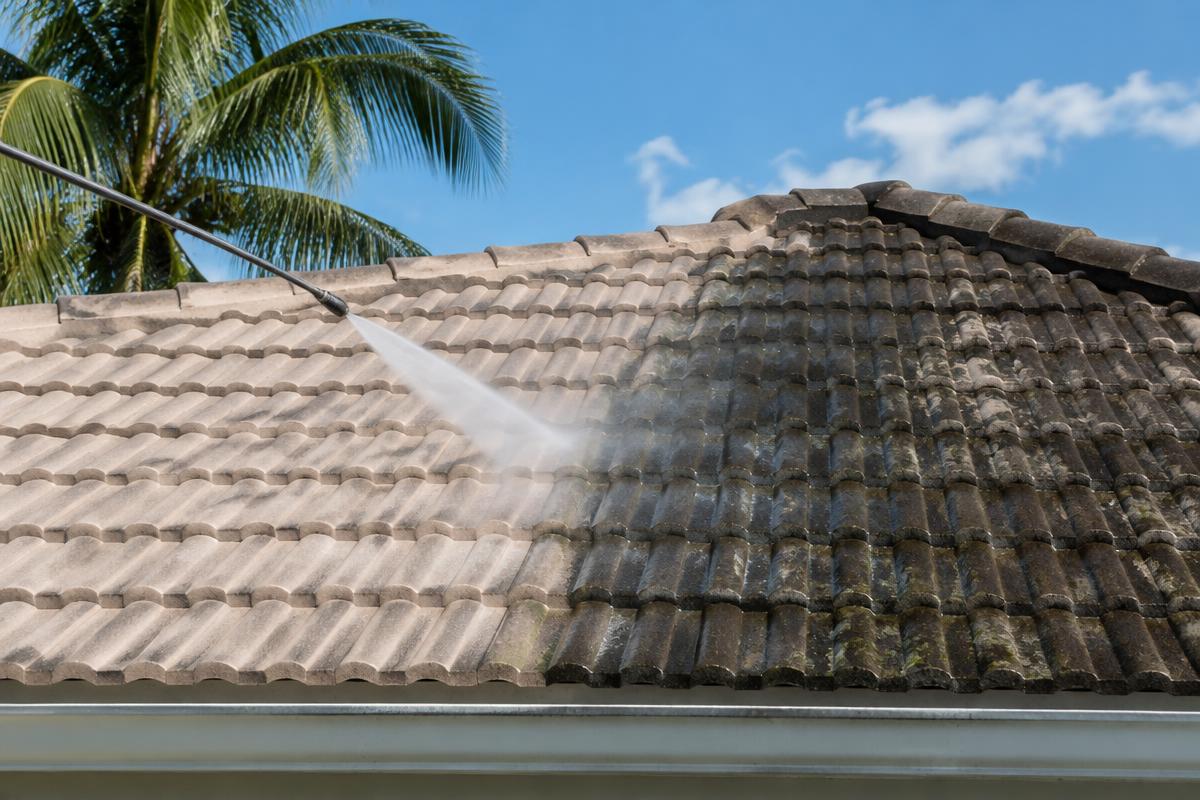
Because the cleaning is done by the solution rather than the water pressure, soft washing is the method most roofing and exterior coating manufacturers prefer. It cleans without forcing water under shingles, chipping tile, etching paint or damaging window seals.
- Best for: tile and shingle roofs, stucco, painted walls, vinyl siding, screen enclosures and some fences
- Treats the cause of black streaks and green film, not just the surface stain
- Results tend to last longer because the growth is treated at the root
What is pressure washing?
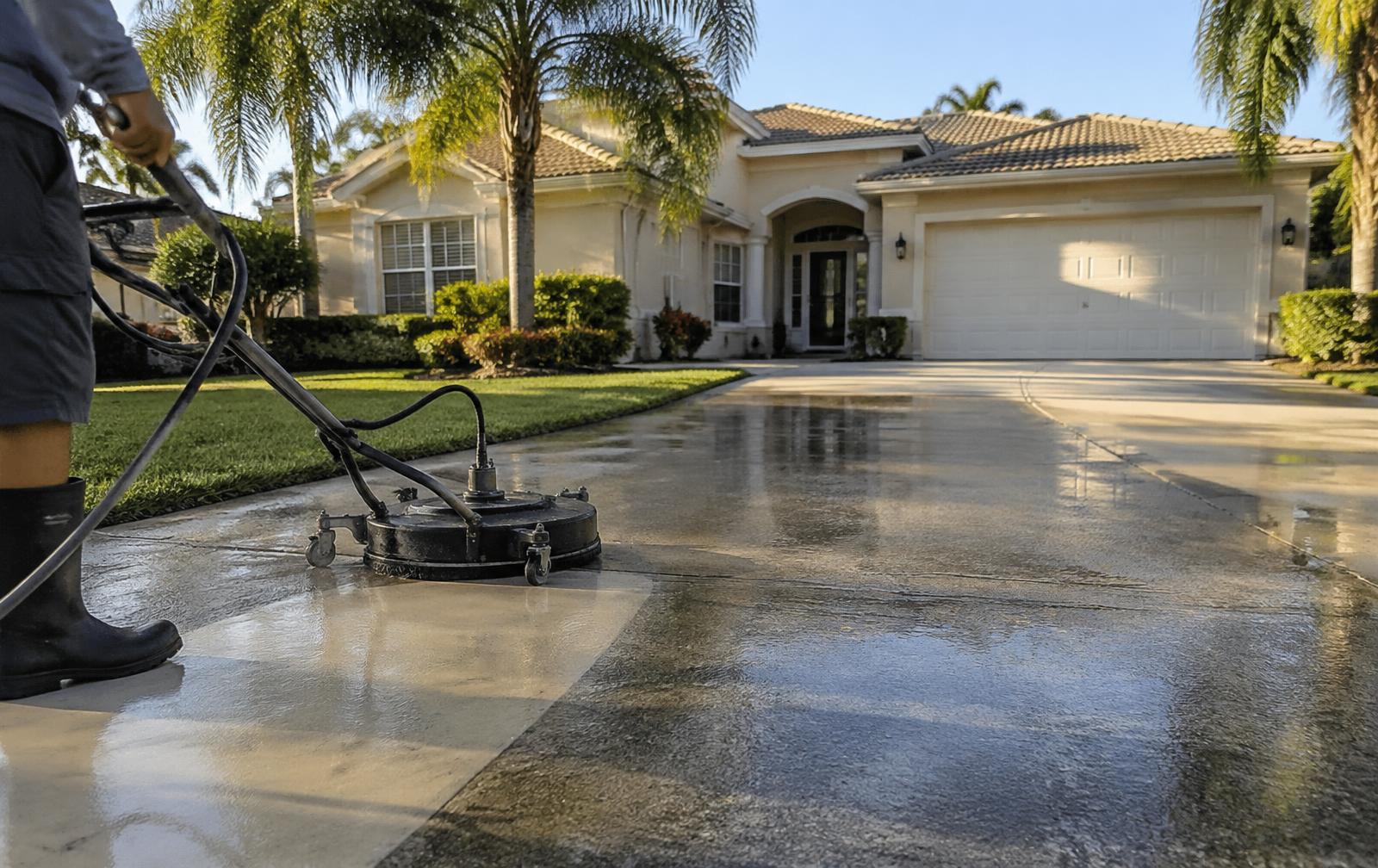
Pressure washing uses high-pressure water to physically blast away dirt, mud, mildew and built-up grime. On hard, durable surfaces this is the fastest way to get an even, clean finish. Professionals usually pair it with a surface cleaner — a rotating attachment that cleans concrete evenly and avoids the stripes left by a handheld wand.
The same force that makes pressure washing effective on concrete is what makes it risky on softer materials. Too much pressure can etch concrete, wash out paver sand, strip paint, gouge wood and crack roof tiles.
- Best for: concrete driveways, sidewalks, garage floors, pool decks and pavers (with the right technique)
- Removes surface dirt, tire marks and grime quickly
- Deep oil stains, rust and old paint may lighten without disappearing completely
Which method for which surface?
Use this as a general guide. The material and its condition always decide the final method.
| Surface | Usual method | Why |
|---|---|---|
| Tile or shingle roof | Soft washing | High pressure can crack tiles and strip shingle granules |
| Stucco and painted walls | Soft washing | Protects paint and avoids forcing water into cracks |
| Vinyl siding | Soft washing | Avoids driving water behind panels |
| Concrete driveway / sidewalk | Pressure washing | Durable surface; even surface-cleaner finish |
| Pavers | Pressure washing (controlled) | Needs care to protect joint sand |
| Pool deck | Depends on finish | Plain concrete vs coated or textured decks |
| Wood fence | Low pressure / soft wash | Wood fibers gouge easily |
| Gutters (exterior) | Soft washing | Removes black streaks without damage |
Why Florida homes get dirty faster
South Florida's heat, humidity and frequent rain create ideal conditions for algae, mildew and mold. The black streaks on so many Palm Beach County roofs are usually a type of algae, and the green or black film on north-facing walls and shaded driveways is organic growth that keeps coming back if it isn't treated.
Many homeowners associations in the area also expect roofs, walls and driveways to be kept clean, which makes regular cleaning part of normal home maintenance here.
How often should you clean your Florida home?
Every home is different — shade, trees, irrigation and nearby water all play a part — but these are common starting points for South Florida:
- House exterior (soft wash): about once a year
- Roof (soft wash): every one to three years, or when streaks appear
- Driveway and sidewalks (pressure wash): about once or twice a year
- Pool deck and patio: about once a year, more often in heavy shade
Power washing vs pressure washing — is there a difference?
Technically, power washing uses heated water while pressure washing uses unheated water. Hot water can help break down grease and oil on commercial concrete. For most homes, the terms are used interchangeably, and the more important question is whether a surface needs high pressure at all — or a soft wash instead.
Can I do it myself?
Rental pressure washers can work on a concrete driveway, but roofs and walls are where most DIY damage happens: cracked tiles, stripped paint, water forced behind siding, and falls from ladders. Soft washing also relies on choosing and mixing the right solution and protecting plants and screens around the home. If you are unsure, ask for a free quote and an honest recommendation on the method.
Frequently asked questions
Is soft washing safe for my roof?
Soft washing is the method generally recommended for tile and shingle roofs because it cleans with a solution instead of high pressure. Damaged or brittle roofs should be assessed first, and cleaning cannot repair broken tiles or leaks.
Will pressure washing remove oil stains from my driveway?
Pressure washing removes surface dirt and grime well. Deep oil, rust and paint stains may lighten but not disappear completely.
Is soft washing safe for plants?
Careful soft washing includes pre-wetting and rinsing nearby plants and landscaping to protect them.
Do you offer both soft washing and pressure washing?
Yes. A-Team Family Pressure Washing offers both and recommends the method based on each surface. Quotes are free.
Not sure which method you need?
A-Team Family Pressure Washing is family-owned, licensed and insured, and serves West Palm Beach and nearby communities. Tell us about your surfaces and we'll recommend the right method with a free quote.